
Wills and Estate Planning Lawyers Perth
Whether it’s a simple will or complex estate strategy, Clairs Keeley offers tailored solutions to protect your family and assets.
Book Your Wills & Estate Planning Consultation
Fill in the form below to talk to our team of lawyers about your Will and Estate Plans.
Clairs Keeley Wills and Estate Planning Services Include
Specialising in wills, our estate planning lawyers can provide you with professionally tailored advice.
Simple Wills
- Appointment of executors
- Clear asset distribution instructions
- Guardianship nominations for minor children
Complex Wills
- Detailed estate analysis
- Identification of potential risks
- Strategic structuring of gifts and trusts
- Coordination with accountants
Estate Planning
- Trust structures
- Business succession planning
- Superannuation considerations
- Asset ownership review
Emily Dalwood

A sincere thank you to Randika and team, who recently helped my husband and I prepare our Wills. As parents… Read more “Emily Dalwood”
Julie Britten

Our Thanks to Randika for help with estate planning . Excellent service
Linda Lombardi

Thank you Randika and Clairs Keeley for your help and advice with our estate planning. Randika was understanding of our… Read more “Linda Lombardi”
Andrew Boulton

During the rather stressful period following our father’s passing earlier this year, Randika helped us quickly obtain probate and was… Read more “Andrew Boulton”
S Samuelraj

After our first conversation with our lawyer Randika in relation to a complex estate matter had my wife and I… Read more “S Samuelraj”
Mark Kaminski

First rate service , second time using them for Wills, and Guardianship etc for parents & myself, could not ask… Read more “Mark Kaminski”
Graham Billson

I was tasked with settling my mother’s 20 year old estate, which was by no means either a straight forward… Read more “Graham Billson”

WHY TALK TO OUR PERTH Wills Lawyers
Planning for the future is one of the most important steps you can take to protect your family, your assets, and your wishes. With the right legal guidance, you can
- create certainty,
- minimise stress for loved ones,
- and ensure your estate is handled exactly as intended.
At Clairs Keeley, our estate planning lawyers provide clear, practical advice tailored to your circumstances. Whether your needs are straightforward or more complex, we help you put the right structures in place with confidence.
If you are ready to take control of your future, speak with our team today.
Protect your future with confidence.
Create a clear plan for your assets and your loved ones. Speak with the Clairs Keeley team today or book your consultation to get started.
Simple Wills - WHEN IS THIS A GOOD CHOICE?
A simple will is often the right choice for individuals and families with uncomplicated financial arrangements. It provides clarity and ensures your assets are distributed according to your wishes.
Our lawyers make the process straightforward and easy to understand.
A simple will may suit you if you:
- Have a smaller or uncomplicated estate
- Wish to leave assets to a spouse, partner, or children
- Do not have complex business interests or trusts
- Want a clear executor appointed
- Prefer a cost-effective planning option
Even a straightforward estate deserves careful attention. A professionally drafted will can prevent costly complications later.
To get started, book a consultation with our team.
Complex Wills - WHEN IS THIS NEEDED?
When your financial or family circumstances are more involved, a carefully structured will becomes essential. Complex wills go beyond basic asset distribution. They focus on protecting wealth, reducing risk, and supporting long-term family outcomes.
At Clairs Keeley, we work closely with you to understand your priorities before recommending the right approach.
A complex will may be appropriate if you:
- Have a blended family
- Own a business
- Hold significant investments or property
- Want to protect vulnerable beneficiaries
- Need tax-aware planning strategies
- Have international assets
- Wish to establish testamentary trusts

What is Estate Planning?
Estate planning is the process of arranging your legal, financial, and personal affairs so that your wishes are carried out — both during your lifetime and after your death. It goes well beyond simply writing a will.
- What happens to your assets when you die — who inherits, how much, and under what conditions
- What happens if you lose capacity while you are still alive — who makes financial decisions for you, who makes medical and lifestyle decisions, and what powers they have
- How to minimise the cost, delay, and conflict involved in administering your estate — including reducing the risk of disputes, avoiding unnecessary tax, and making the probate process as straightforward as possible for your family
- How to protect your assets and your beneficiaries — from creditors, relationship breakdowns, poor financial decisions, or the loss of government entitlements
- How your estate interacts with structures you already have — including superannuation, family trusts, business entities, insurance policies, and jointly held assets
Estate planning is not a single document — it is a coordinated set of documents and strategies that work together. A will on its own, without the supporting documents, leaves significant gaps that can cause real problems for your family.
What Does a Complete Estate Plan Include?
- Your Will — directs how your assets are distributed, names your executor, and nominates a guardian for minor children.
- Enduring Power of Attorney (EPA) — appoints someone to manage your financial and legal affairs if you lose capacity.
- Enduring Power of Guardianship (EPG) — appoints someone to make personal, lifestyle, and medical decisions if you lose capacity. An EPA covers your finances; an EPG covers your person.
- Superannuation Death Benefit Nominations — without a valid binding nomination, your super fund trustee decides who receives your super, not you.
- Testamentary Trusts — a trust created within your will that takes effect after death. Benefits include:
- Tax benefits — income to minor beneficiaries taxed at adult rates
- Asset protection — from creditors or relationship breakdown
- Control — you decide when and how assets are distributed
- Advance Health Directive (AHD) — records your wishes for future medical treatment if you cannot communicate them yourself. Works alongside your EPG.
- Business Succession Planning — addresses what happens to your business when you die or lose capacity, including buy-sell agreements and coordination with governing documents.
- Asset Ownership Review — how assets are owned determines how they pass on death. We review your structures to ensure your plan works as intended.
- Insurance Review — we check your life, TPD, and income protection arrangements align with your estate plan.
What Happens If You Don't Have an Estate Plan?
No will? Your estate is distributed under the rigid intestacy rules — not according to your wishes. Your spouse may not receive everything. Your children may inherit at an age you consider too young. The administration process is slower and more expensive.
No EPA or EPG? No one — not your spouse, not your children — has automatic authority to manage your finances or make care decisions. Your family must apply to the SAT, which can take months, costs thousands, and involves public hearings.
Super nominations not current? Your fund trustee decides who gets your death benefit. Expired binding nominations (most expire after 3 years) are treated as if no nomination exists.
Assets not structured correctly? A jointly held property passes to the co-owner automatically, regardless of what your will says. If you assumed your share would go to your children, it won’t.
Will conflicts with business agreements? Your family may be locked out of the business, or disputes between your partners and beneficiaries may end up in court.
Without a legally valid will:
- Your estate is distributed according to legislation, not your preferences
- Loved ones may face lengthy administrative delays
- Family disputes become more likely
- Minor children may not have your preferred guardian
- Taxes and costs may reduce the value of your estate
Taking action today provides clarity for tomorrow.


Common Estate Planning Mistakes We See in Perth
As a firm that handles both estate planning and deceased estates, we see the consequences of these mistakes every week:
- Assuming a will is enough — a will only takes effect after you die. Without an EPA and EPG, your family is powerless if you lose capacity.
- Forgetting about superannuation — your super does not pass under your will without a valid binding nomination. Expired nominations are as good as no nomination at all.
- Not understanding joint ownership — jointly held assets bypass your will entirely and pass to the surviving co-owner by law.
- Using a DIY will kit — the money saved upfront is almost always dwarfed by the cost of fixing problems later. We regularly see DIY wills that are invalid, ambiguous, or incomplete.
- Not updating after life events — marriage revokes your will in WA. Separation does not. New children, new assets, and health changes all require a review.
- Conflicting documents — your will says one thing, your super nomination says another, and your trust deed contradicts both. These conflicts create expensive disputes.
- Choosing the wrong executor or attorney — someone who is unwilling, unable, or unsuitable can create significant problems. Always include backups.
- Putting it off — the biggest mistake of all. Every week without an estate plan is a week your family is unprotected.
Estate Planning at Every Stage of Life
Your estate plan should evolve as your life does:
Young Adults (18–30): A basic will, EPA, and EPG. You probably have super, savings, and a partner who should be provided for. Start simple — you can expand later.
Growing Families (30–45): Will with guardian nominations, EPA, EPG, super review, and life insurance review. Nominating a guardian for your children is the most urgent priority at this stage.
Established Families and Professionals (45–60): A comprehensive plan — complex or testamentary trust will, EPA, EPG, super review, business succession, and asset structure review. Assets are more diverse, blended family situations are more common, and asset protection becomes relevant.
Pre-Retirement and Retirement (60+): Updated will, EPA, EPG, Advance Health Directive, super review (pensions and BDBNs), and aged care considerations. Review whether your executor and attorney appointments are still appropriate.
Regardless of your stage, the best time to start is now.


Not All Your Assets Go Through Your Will
This is one of the most commonly misunderstood areas of estate planning:
Assets that pass under your will: Property in your sole name, bank accounts in your sole name, shares and investments in your sole name, personal belongings, and your share of property held as tenants in common.
Assets that bypass your will entirely: Jointly held assets (pass automatically to the surviving co-owner), superannuation (distributed by the fund trustee, not your will), life insurance with a nominated beneficiary (paid directly to them), and family trust assets (not “your” assets — they belong to the trust).
If your estate plan doesn’t account for how each asset type is dealt with, the result may be very different from what you intended. We map every asset, identify how it is owned, and ensure the right mechanism is in place for each one.
Estate Planning and Tax — What You Need to Know
Australia does not have a general inheritance tax, but there are tax consequences when assets pass on death:
- Capital Gains Tax (CGT): Generally deferred when an asset is inherited, but the beneficiary may face a CGT liability when they eventually sell it. Your estate plan can structure distributions to minimise this.
- Superannuation death benefits: Benefits paid to “tax dependants” (spouse, children under 18) are tax-free. Benefits paid to adult independent children may attract tax of up to 32% on the taxable component. Structuring your super nominations correctly is one of the most impactful tax planning strategies available.
- Testamentary trust advantages: Income from a testamentary trust distributed to minor beneficiaries is taxed at adult rates — meaning up to $18,200 per year can be received tax-free.
- Stamp duty: Transfers of property to beneficiaries under a will are generally exempt, but variations (such as through a Deed of Family Arrangement) may trigger a liability.
We are not tax advisers, but we understand how tax interacts with estate planning and work with your accountant to ensure your plan is as efficient as possible.


Why Clients Choose Clairs Keeley
Selecting the right estate planning lawyers is an important decision. Clients trust Clairs Keeley because we combine legal precision with practical, easy-to-understand advice.
What sets our firm apart:
- Clear communication without unnecessary legal language
- Strategies tailored to your personal and financial circumstances
- A proactive approach to risk management
- Transparent guidance throughout the process
- Respectful, client-focused service
- Strong understanding of Australian estate law
We recognise that estate planning is deeply personal. Our team listens carefully and provides recommendations designed to give you confidence.
Most importantly, we focus on creating certainty so your family is supported when it matters most.
FAQ for Our Perth Will Lawyer Team
What is the difference between a will and estate planning?
A will is a legal document that outlines how your assets should be distributed after your death. Estate planning is broader. It includes your will, powers of attorney, guardianship arrangements, and strategies to protect your assets and beneficiaries both during your lifetime and beyond.
Do I really need a will if my finances are simple?
Yes. Even with a modest estate, a legally valid will ensures your wishes are followed. Without one, your estate is distributed according to Australian succession laws, which may not reflect your intentions.
When should I update my will?
You should review your will whenever major life events occur, including:
- Marriage or separation
- Buying or selling property
- Starting or selling a business
- Having children or grandchildren
- Significant financial changes
- As a general guide, reviewing your will every three to five years helps keep it current.
What makes a will ‘complex’?
A complex will is usually required when your circumstances involve additional risk or planning considerations, such as:
- Blended families
- Business ownership
- Investment portfolios
- Multiple properties
- International assets
- Beneficiaries needing additional protection
Complex wills often include testamentary trusts and structured inheritance strategies.
Can estate planning help reduce family disputes?
Yes. Clear instructions and legally sound documents significantly reduce the likelihood of misunderstandings and challenges. Professional estate planning provides certainty and helps your family navigate a difficult time with less stress.
What happens if I die without a will in Australia?
If you pass away intestate (without a will), legislation determines how your estate is distributed. This process can be slower and may not align with your preferences. It can also create additional emotional and financial pressure for your loved ones.
Are DIY wills a safe option?
DIY wills can appear convenient, but they often fail to address important legal and structural issues. Errors or unclear wording may invalidate the document or create disputes. A professionally prepared will provides greater protection and peace of mind.
What is a testamentary trust and why would I need one?
A testamentary trust is created within your will and comes into effect after your death. It can:
- Protect assets from creditors
- Offer potential tax advantages
- Support young or vulnerable beneficiaries
- Provide long-term control over how inheritances are used
It is commonly recommended for families seeking stronger asset protection.
Who should I appoint as an executor?
Your executor should be someone trustworthy, organised, and capable of handling legal and financial responsibilities. Many people choose a close family member, trusted friend, or professional adviser. We can help you assess the most suitable option.
Clairs Keeley Wills and Estate Planning Services
Here are some more of the ways we can help you with Wills & Estate Planning.








Our Expert Wills and Estate Lawyers

Randika Rajkumar
Randika Rajkumar has been a solicitor at Clairs Keeley Lawyers since 2023, practising in Wills, Estate Planning and Deceased Estates.
He holds a Bachelor of Laws from Murdoch University and is completing a Master of Applied Law specialising in Estate Planning and Business Law.
Randika advises clients on probate, Letters of Administration, trusts and business succession planning, with experience across both estate and commercial matters. As a trained collaborative lawyer, he focuses on achieving practical, legally sound outcomes while supporting families through complex and sensitive estate issues.
Relevant Practice Areas:
Deceased estates • Probate & Letters of Administration • Wills & estate planning • Trusts & business succession
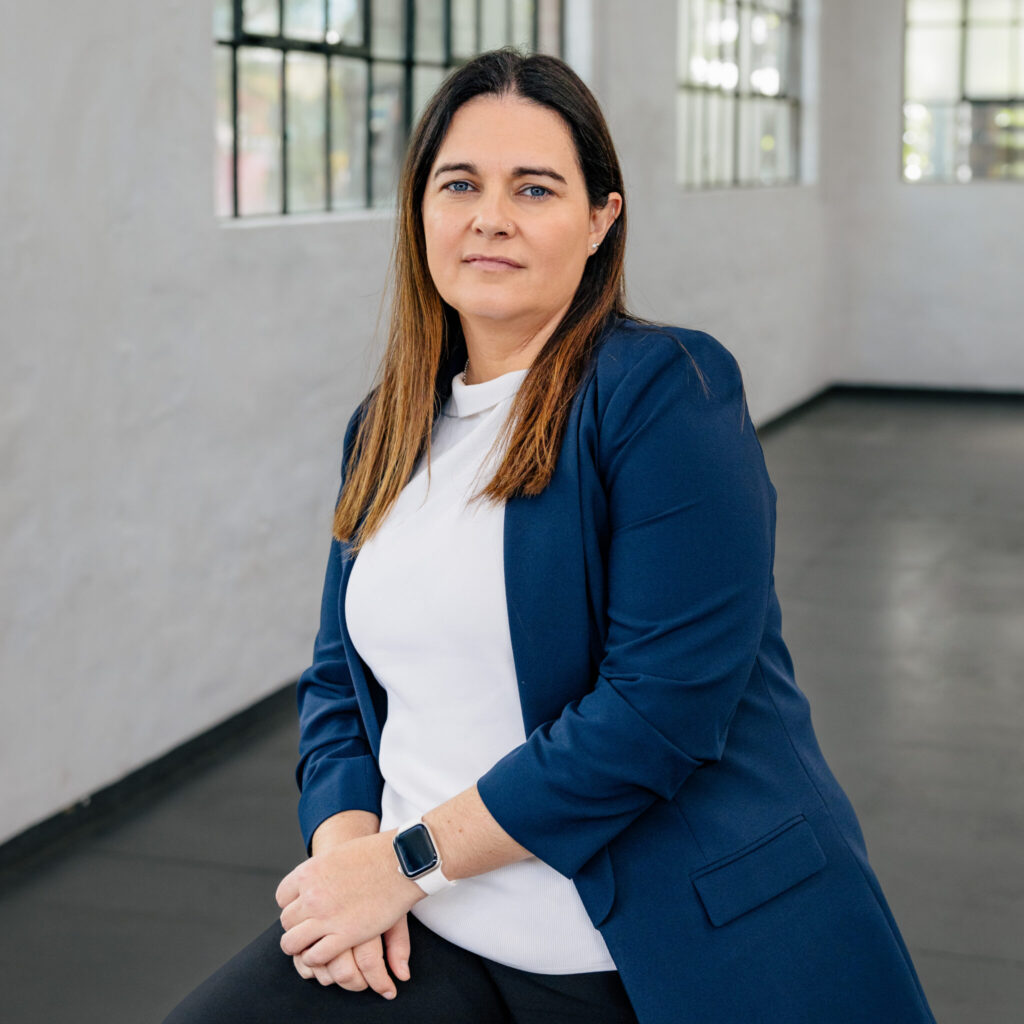
Candice Jonker
Candice Jonker is a Senior Associate practising in Wills, Estate Planning and Deceased Estates.
Admitted in 2019, she holds a Bachelor of Laws and Bachelor of Business from Murdoch University and a Master of Laws specialising in Wills & Estates Planning and Estate Administration.
Candice advises executors and families on probate, Letters of Administration, testamentary trusts and complex estate matters, including business and trust structures. Her collaborative training supports practical, strategic resolution of estate matters while preserving family relationships.
Relevant Practice Areas:
Deceased estates • Probate & Letters of Administration • Wills & estate planning • Trusts & Business succession
Protect your future with confidence.
Create a clear plan for your assets and your loved ones. Speak with the Clairs Keeley team today or book your consultation to get started.